
Designing for Trust and Uncertainty in AI-Assisted Home Decisions
PROJECT SNAPSHOT
Company
Foyr
Role
Product Designer (End-to-End Ownership)
Team
Product, Engineering, Design Lead
Problem
Users could generate many AI design options but struggled to decide what to refine, compare, or commit to.
Impact
Structured AI exploration into guided decision steps, helping users move forward with greater confidence.
Executive Summary
Users could generate many AI design options but struggled to decide what to refine, compare, or commit to, resulting in hesitation and repeated exploration without progress.
Problem
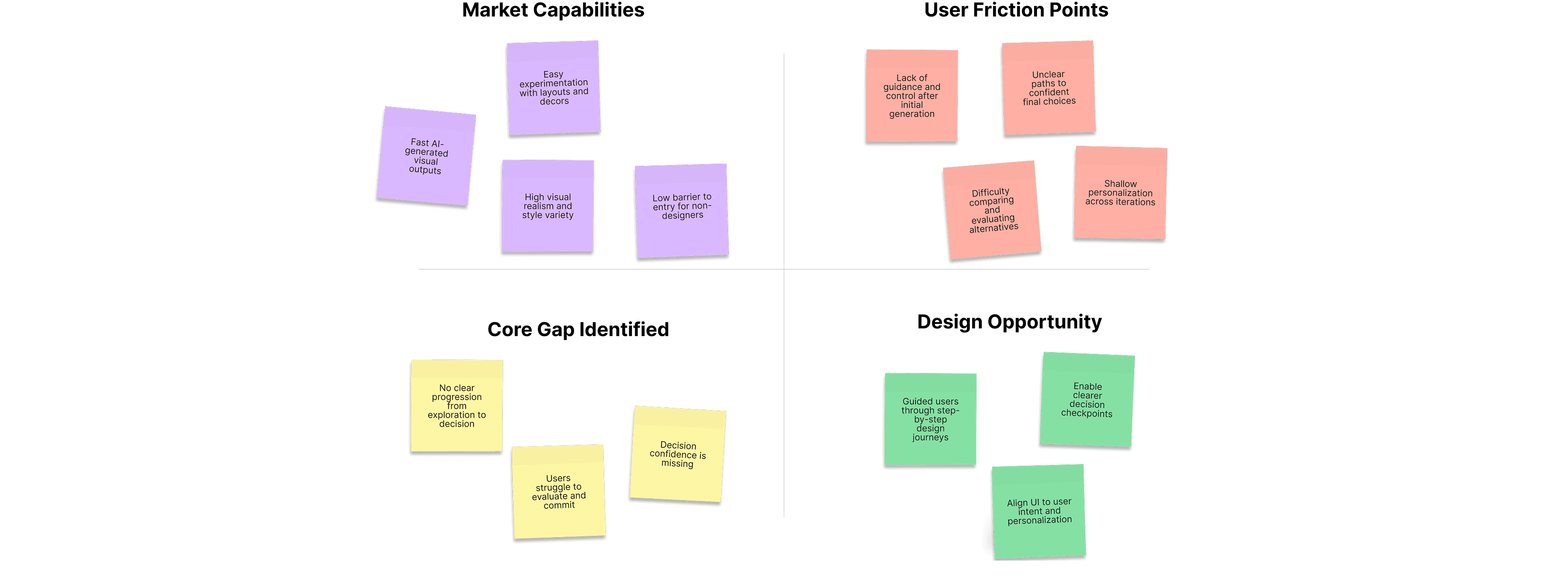
AI interior design tools could generate many design variations, but users struggled to evaluate options and decide what to refine or commit to.
I studied existing AI interior design platforms such as Collov.ai and ReimagineHome to understand where users were getting stuck.
Why This Problem Mattered
When users couldn’t determine what to adjust or when to commit, exploration cycles extended unnecessarily. This led to repeated regenerations, higher cognitive load, and delayed decision-making despite abundant AI outputs.
Key Insight
AI-based design tools optimized for fast generation, but users struggled to evaluate options, understand what to refine, or know when a design was “good enough” to commit to. Speed increased outputs, but not decision confidence.
KEY PRODUCT DECISIONS
Decision 1
Progressive decision steps vs open-ended generation
Why
Users could generate many AI outputs but struggled to determine what to refine or commit to.
Decision
Structure the experience around sequential decision steps that guide users from exploration to commitment.
Trade-off
Reduced open-ended experimentation in exchange for clearer forward momentum.
Decision 2
User control vs full AI automation
Why
Users needed confidence before committing to design decisions.
Decision
Allow users to refine, override, or narrow AI suggestions at each stage.
Trade-off
Slightly slower interactions in exchange for stronger decision confidence.
Design Direction
1. Refreshing Existing Spaces
Users explore alternative layouts, styles, and décor for rooms they already live in, using AI suggestions to rethink aesthetics and spatial arrangements while preserving the existing structure.
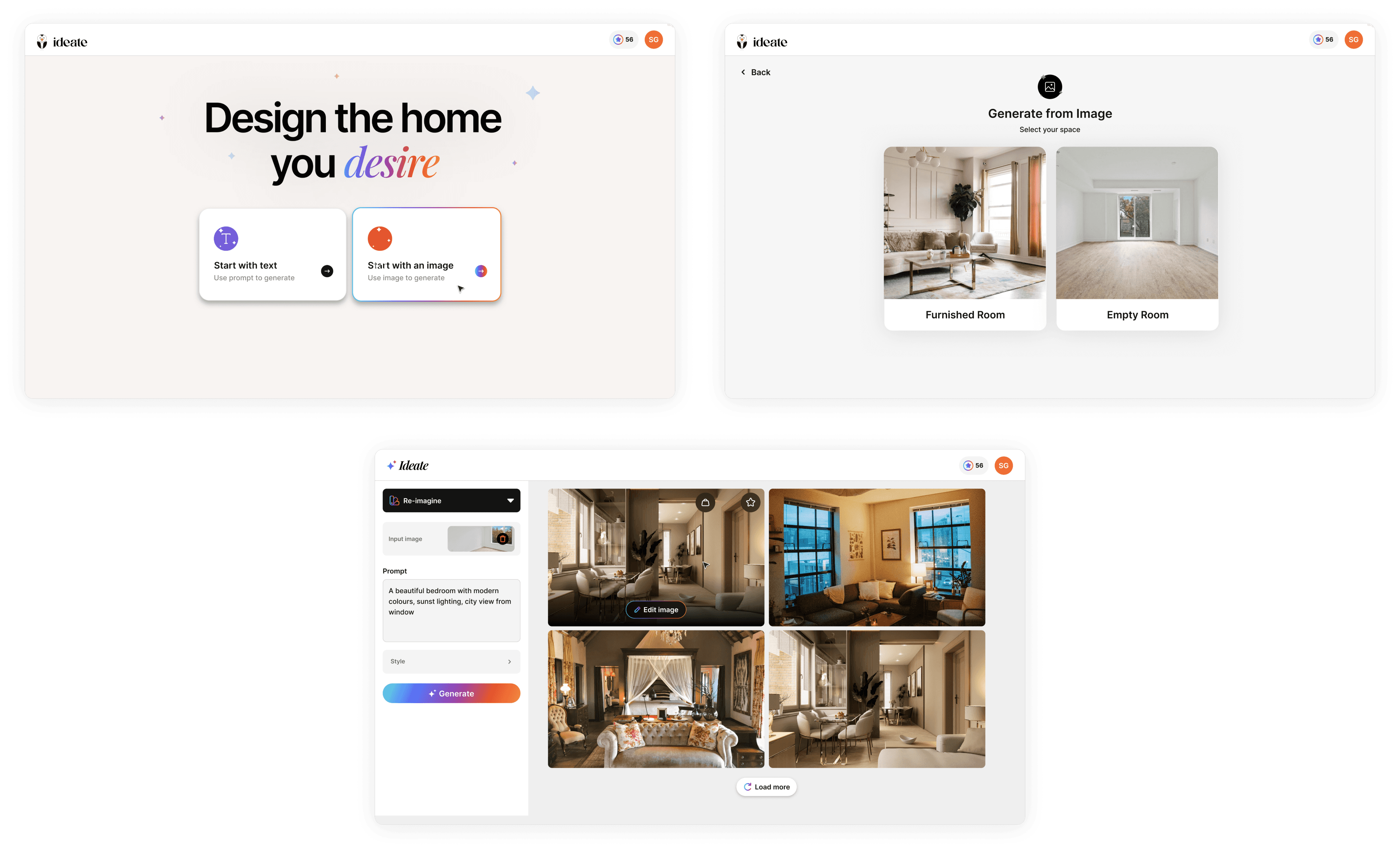
Reimagining the look and feel of existing rooms.
2. Designing From Scratch
Users define new spaces by setting foundational parameters such as room type, layout, style, and furniture preferences, allowing the system to generate and iterate on complete design directions.
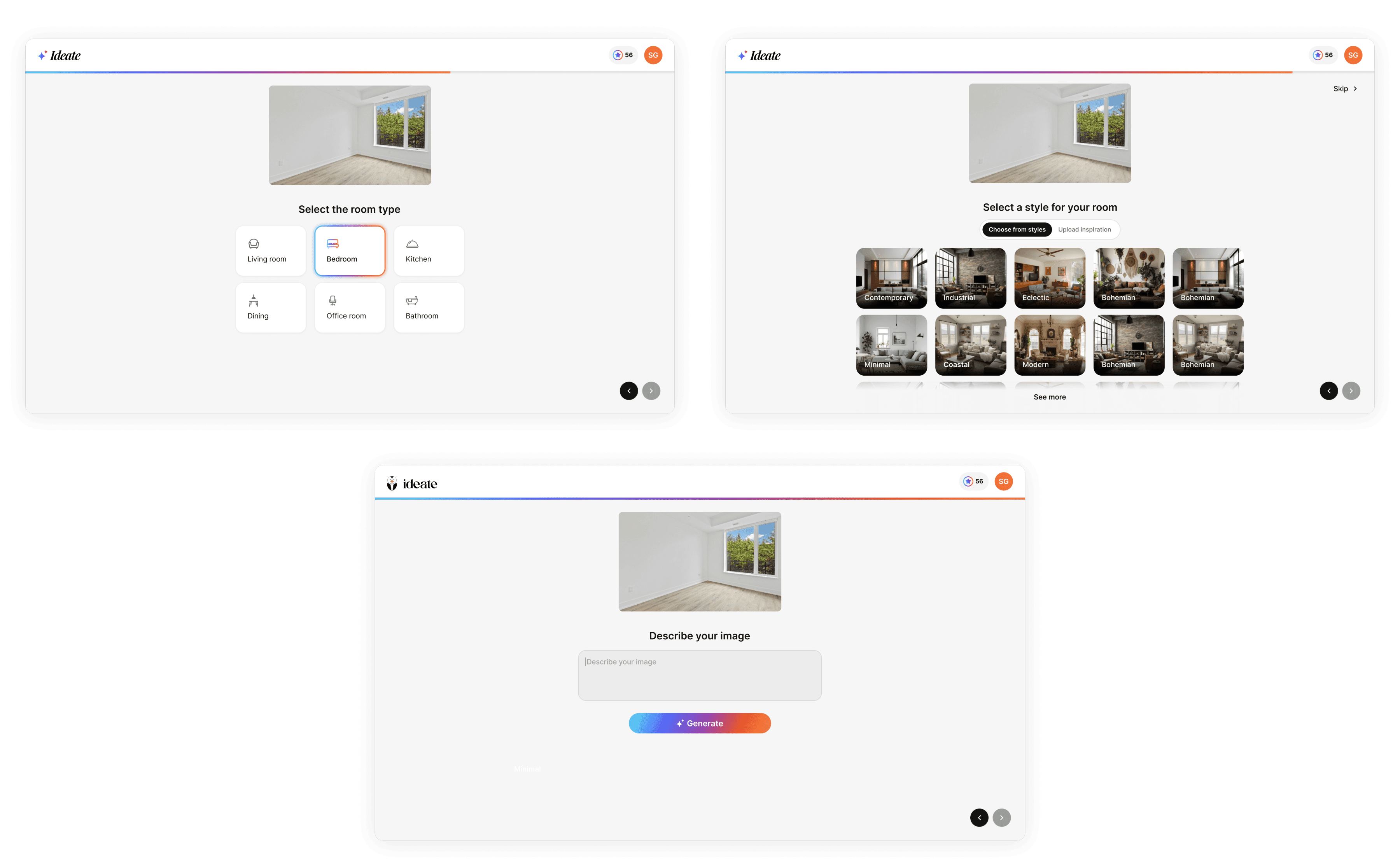
Beginning the design by setting key choices
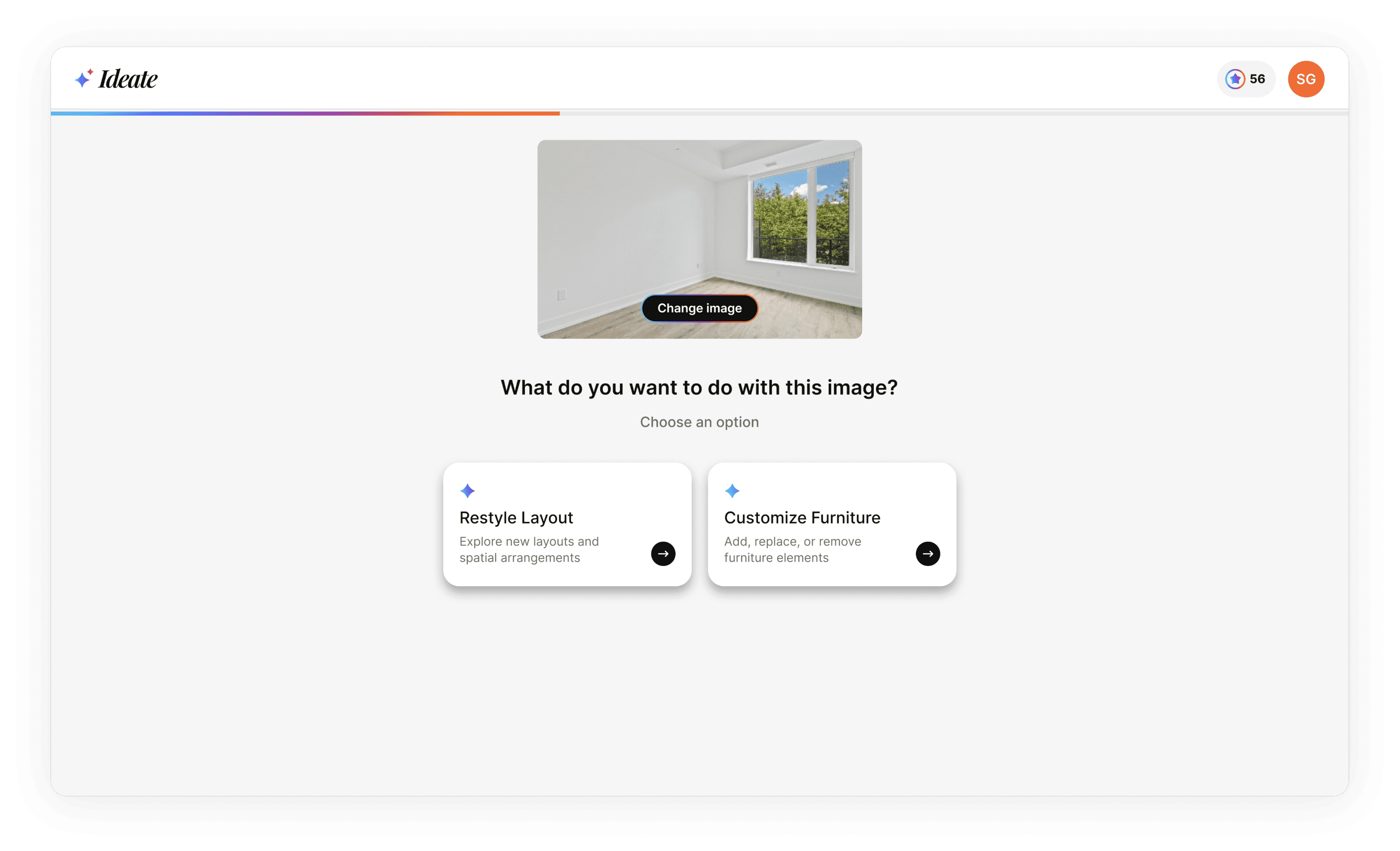
3. Customizing Spaces with Furniture
Users can add, replace, or remove furniture elements within a room, allowing them to explore different furniture options and configurations as part of their design.
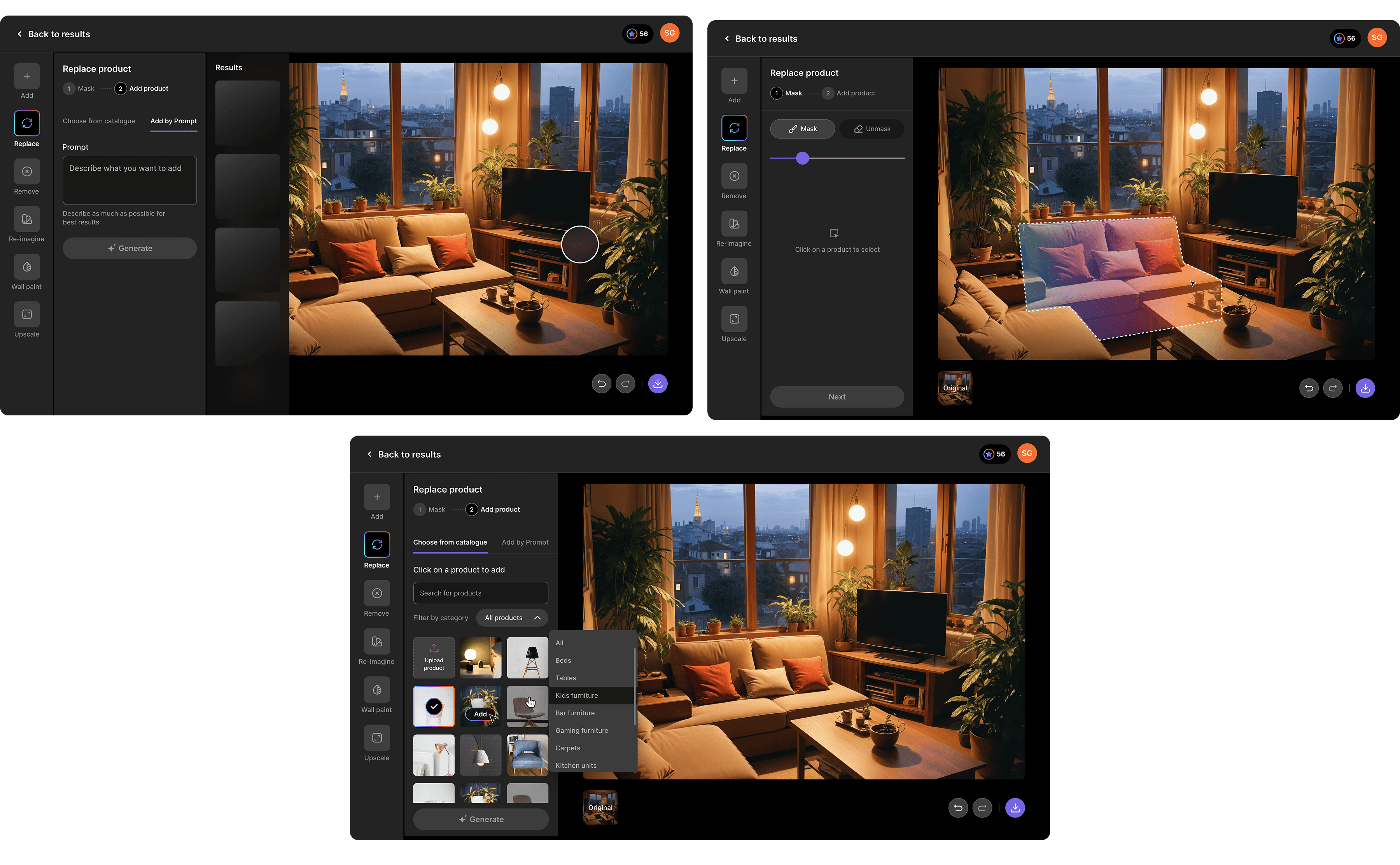
Structuring a space with furniture.
Iteration Based on Early Use
Users looking to make small, targeted furniture changes felt slowed down by broader redesign steps. Introducing a focused entry path allowed quicker updates without pushing users through unnecessary decisions. This reduced unnecessary decision branching and helped users make progress without reopening earlier choices.
Outcomes
Behavior Change
• Fewer decision reversals once choices were structured sequentially
• Reduced regeneration cycles during design exploration
Workflow Improvement
• Faster completion for focused furniture updates
• Reduced need to restart full design flows
User Confidence
• Users validated design directions visually before committing
• Increased use of previews and comparisons before final decisions
Reflection
AI generation alone does not create value.
Users need structure to evaluate options and move forward confidently.
Designing guided decision steps turned exploration into progress.