
Executive Summary
Real-estate journeys stall not because of lack of options, but because users struggle to act when intent forms due to fragmented discovery, delayed responses, and unclear next steps.
Problem
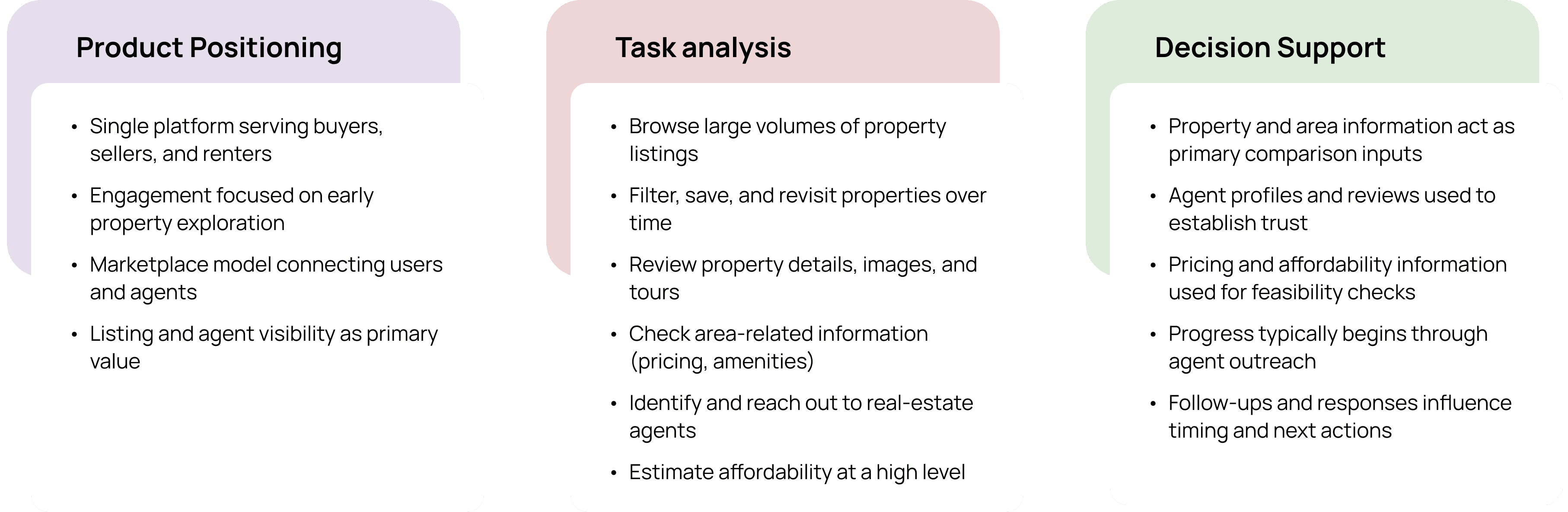
KEY PRODUCT DECISIONS
Decision 1
Integrated flow vs fragmented tools
Why
Users lost momentum when discovery, evaluation, and communication happened across separate tools.
Decision
Collapse discovery, evaluation, and action into a single continuous experience.
Trade-off
Reduced depth of individual features in exchange for maintaining decision continuity.
Decision 2
Early action support vs passive browsing
Why
Users needed the ability to act immediately when intent formed.
Decision
Surface agent access and financial readiness earlier in the journey.
Trade-off
Risk of overwhelming some users in exchange for enabling confident action at peak interest.
Design Direction
The goal was to maintain user momentum from discovery to action without forcing context switches.
Based on this insight, the product direction focused on reducing decision fragmentation rather than adding more surface-level features. The goal was to support users through the full journey, search, evaluation, interaction, and commitment—without breaking context.
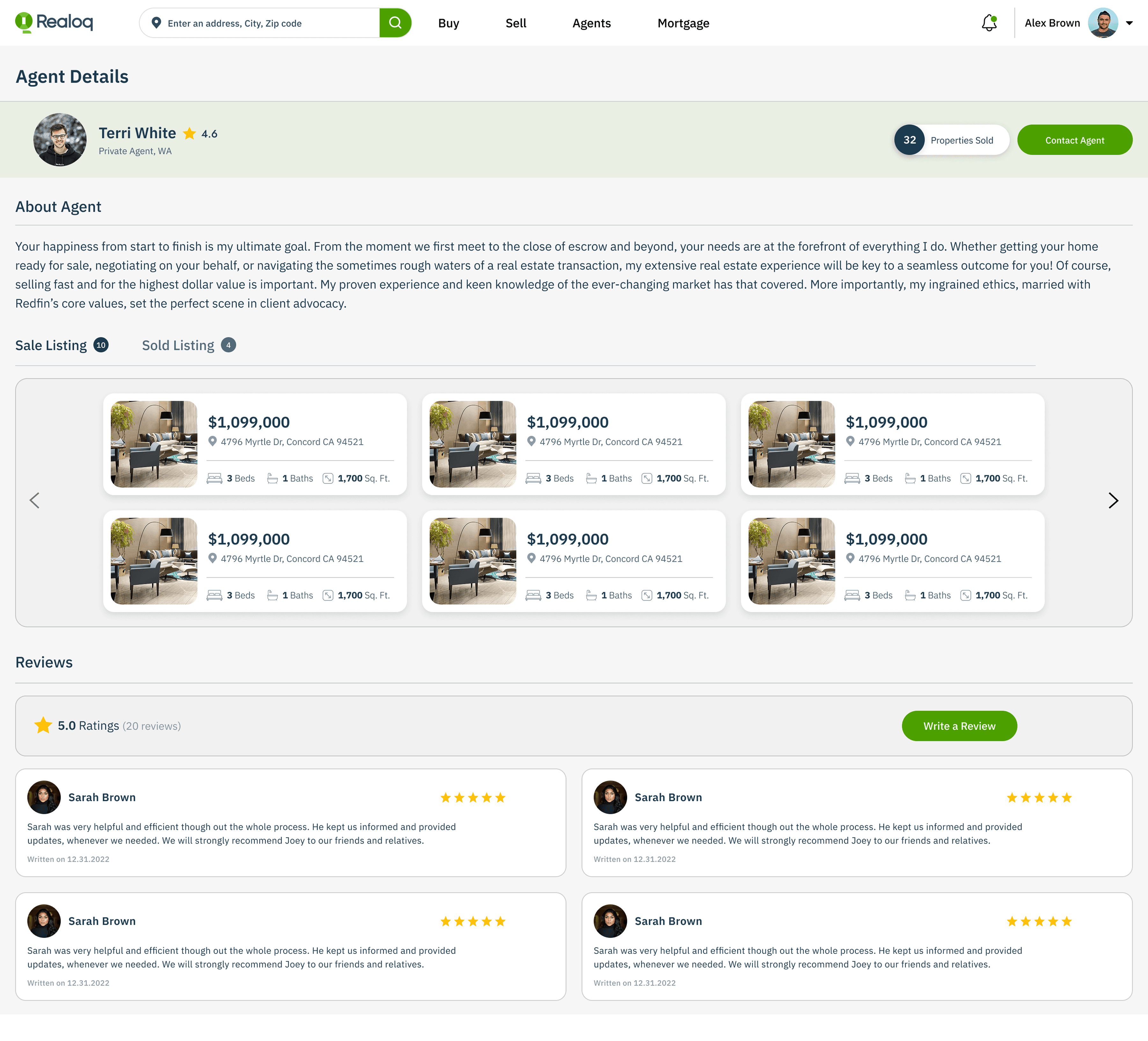
1. Instant Agent Discovery & Contact
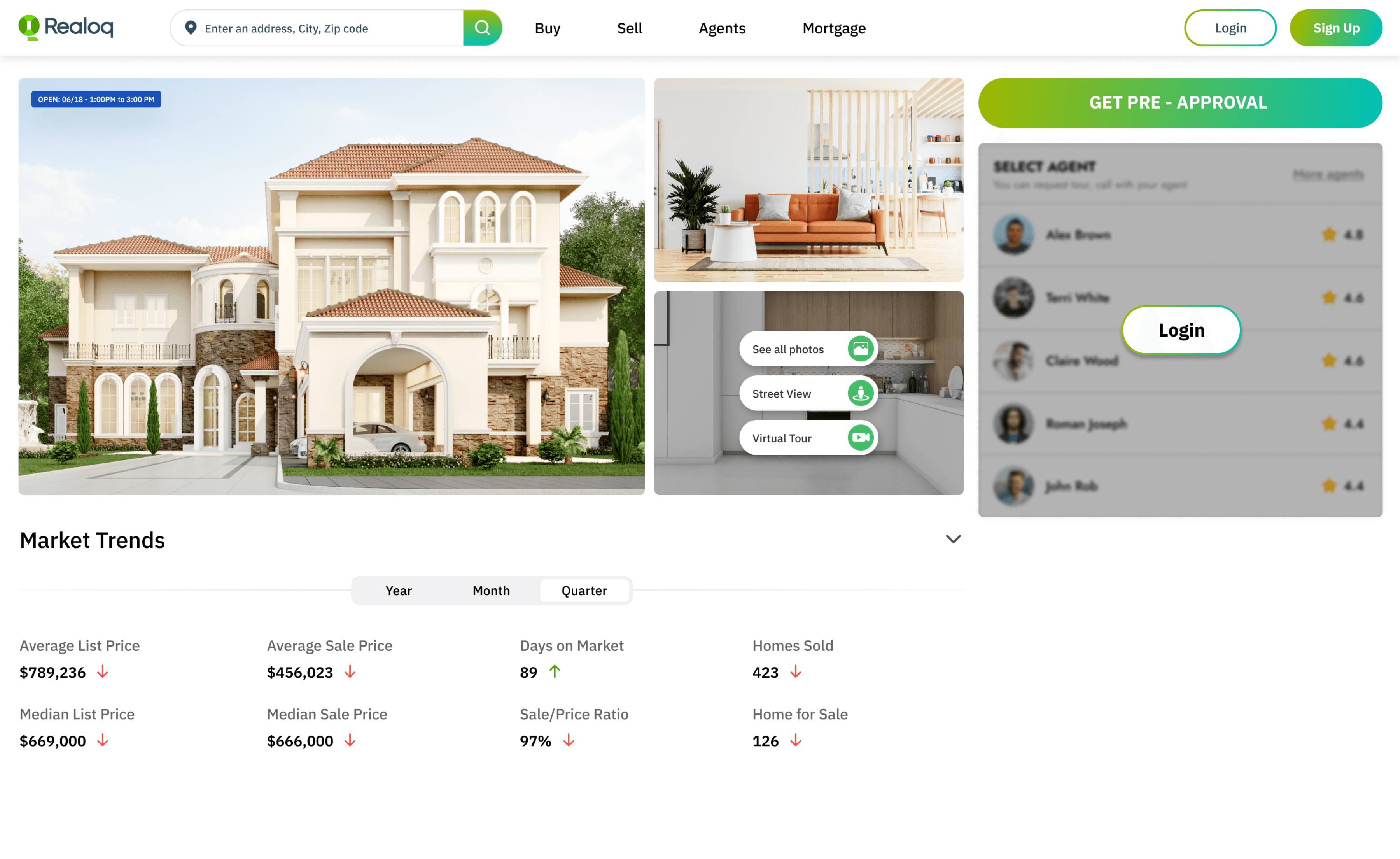
2. Market & Area Insights
Area-level context such as accessibility, demographics, and market trends is integrated directly into exploration, allowing users to evaluate locations without switching tools or breaking their flow.
Iteration Based on Early Use
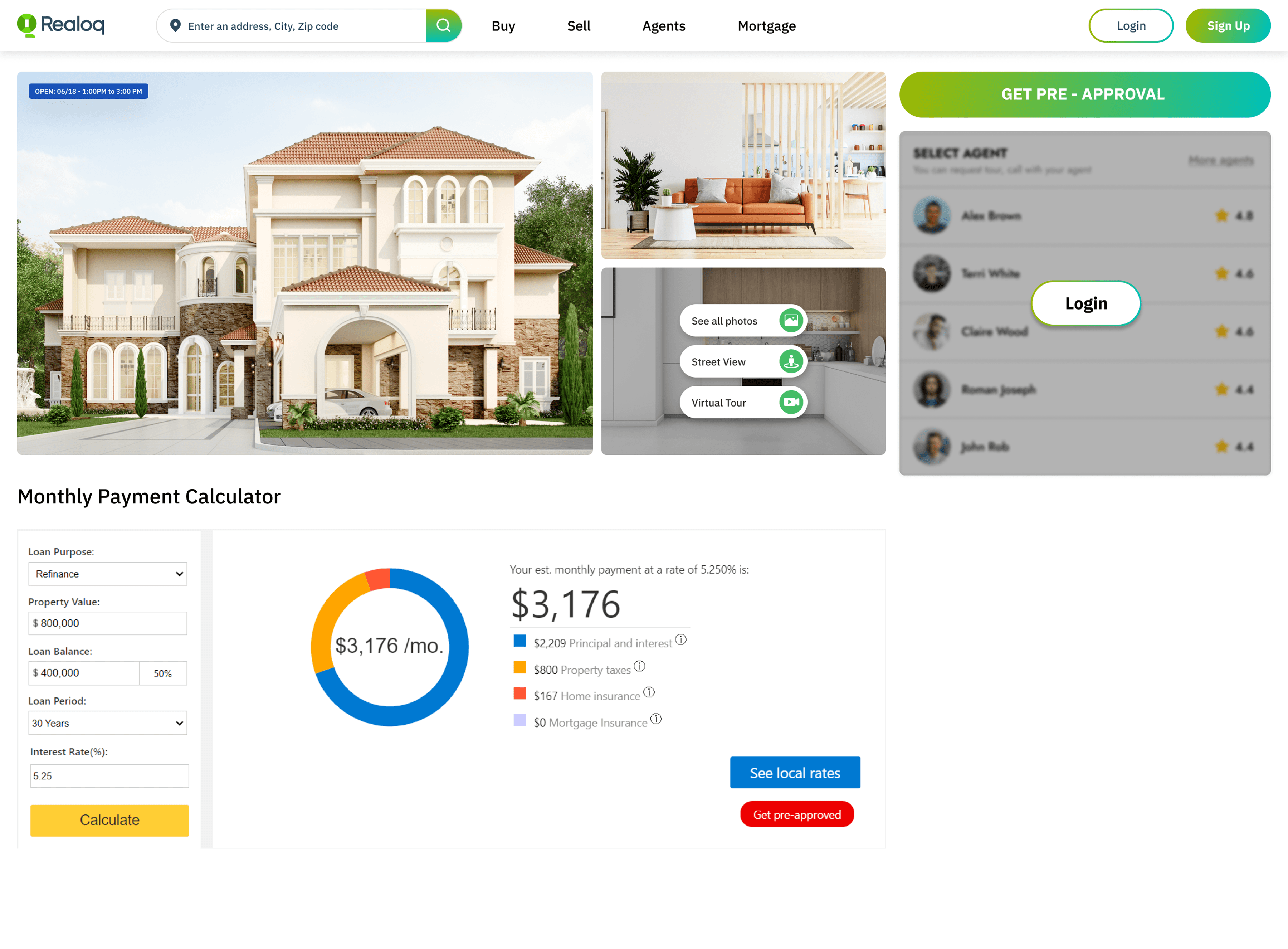
Issue: Users had to wait an entire day after receiving a generic “We will connect with you in 48 hours” message, creating uncertainty about next steps.
Solution: Introduced a personalized response-time preference, allowing users to choose when they wanted to hear back and making progress explicit.
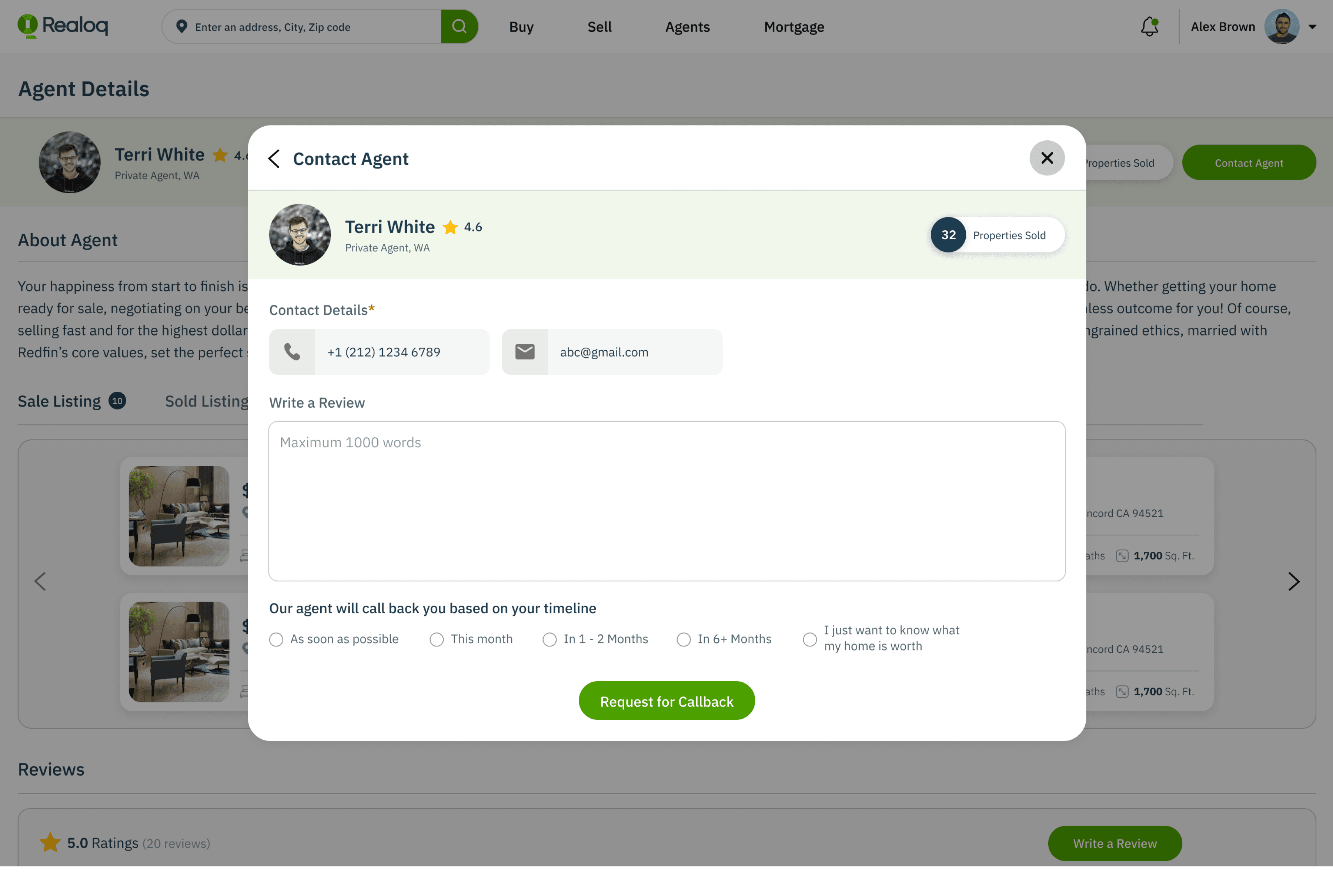
Choosing callback timing during agent contact
Issue: Buyers had to leave the platform to check accessibility, employment data, and area-level context during evaluation.
Solution: Integrated these signals directly into the Area Insights view, enabling evaluation without switching tools or breaking the flow.
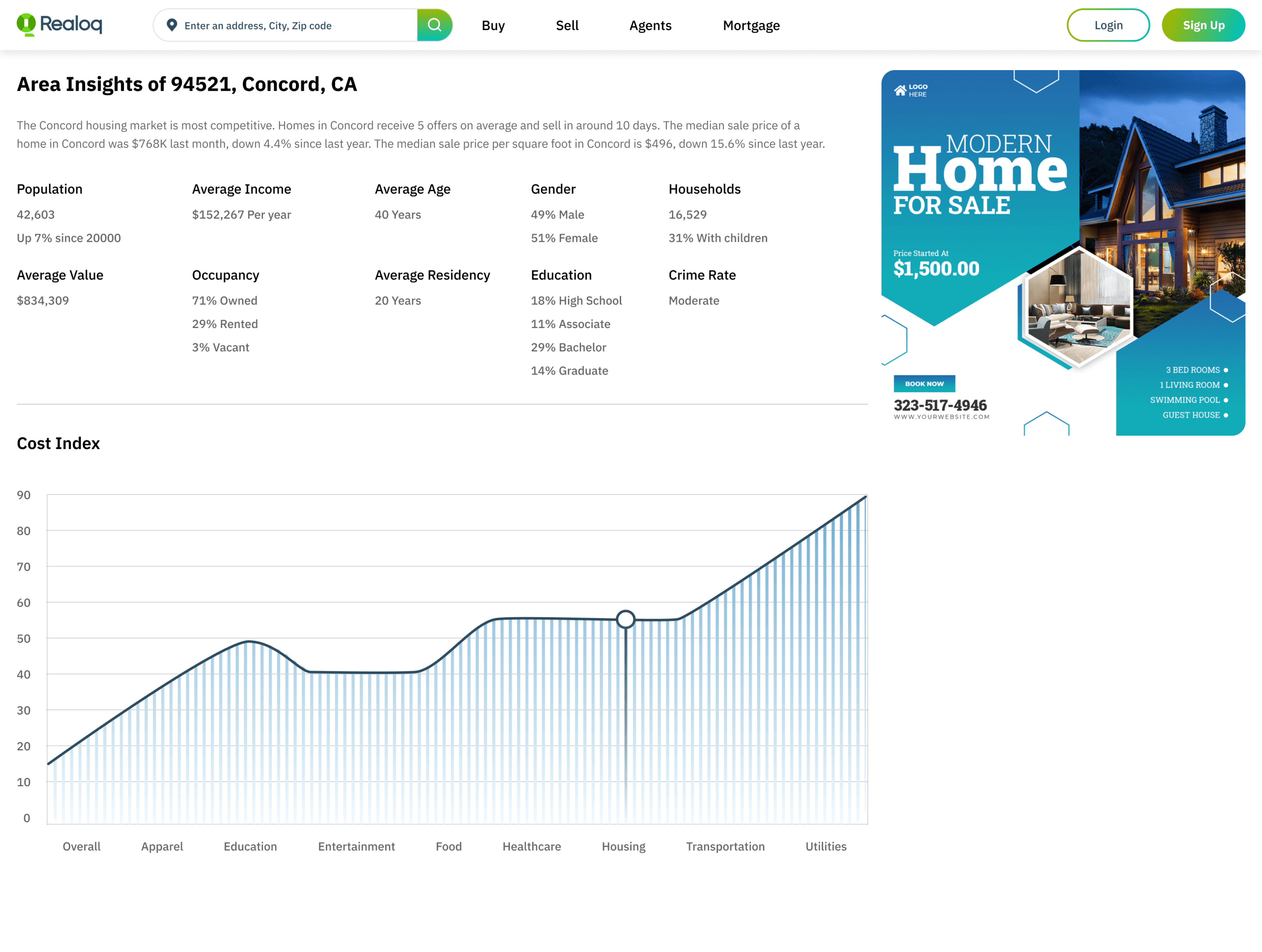
Evaluating area context without leaving the platform
Outcomes
Behavior Change
• Reduced reliance on external tools during property evaluation
• Faster transition from browsing to agent contact
Workflow Improvement
• More steps completed within a single session
• Reduced need to switch platforms for research and evaluation
User Confidence
• Greater clarity before financial and property decisions
• Users understood when to explore versus when to act
Reflection
This project reinforced that momentum in complex decisions depends less on the number of options and more on the ability to act at the right moment.
By reducing fragmentation and supporting moments of intent, the experience helped users move forward without hesitation.