
Improving Status Visibility in Interior Design Workflows
PROJECT SNAPSHOT
Company
Asian Paints
Role
Product Designer (End-to-End Ownership)
Team
Product, Engineering, Design Lead
Problem
During interior design projects, homeowners and designers struggled to understand project progress and feedback status after design reviews.
Impact
Reduced manual follow-ups and improved coordination during design review cycles.
Executive Summary
Post-review collaboration patterns showed that users struggled to determine what to act on next during ongoing projects.
The absence of visible progress signals meant stakeholders relied on manual follow-ups to confirm feedback status, responsibility, and next actions.
Problem
This project focused on reducing coordination breakdown during multi-stage design reviews.
Interior design projects involve multiple review cycles between homeowners and designers, but the platform lacked clear signals indicating project progress and feedback status.
Each cycle includes feedback, revisions, and approvals across several design iterations.
However, the platform did not provide reliable signals indicating:
• whether feedback had been addressed
• who needed to act next
• whether a design version had progressed to the next stage
As a result, collaboration depended heavily on manual coordination.
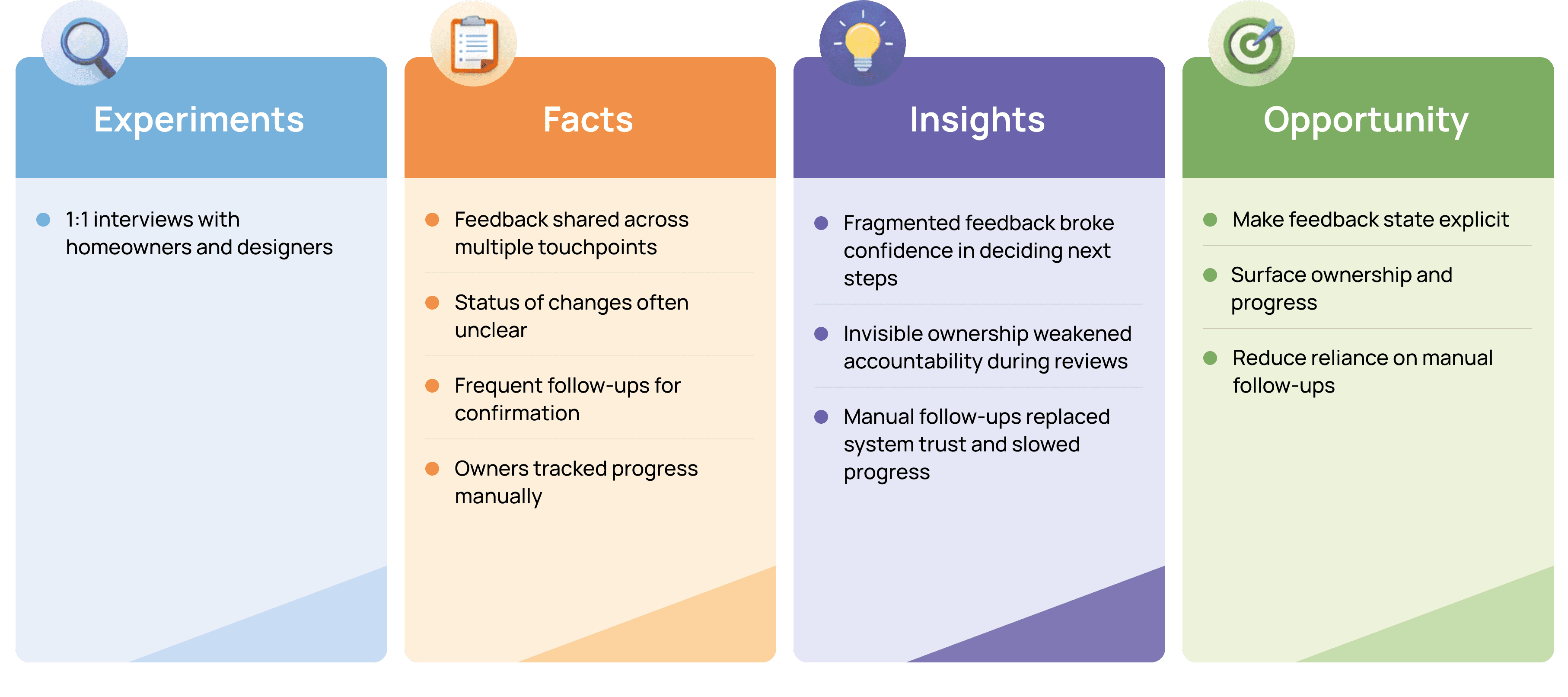
Why This Problem Matters
Key Insight
KEY PRODUCT DECISIONS
Decision 1
Explicit progress states vs implicit progress
Why
Users relied on manual follow-ups to understand whether feedback had been addressed or work had progressed.
Decision
Introduce structured review states that clearly indicate feedback status and ownership.
Trade-off
Slightly more structured interactions in exchange for clear coordination signals.
Decision 2
Visible version history vs minimal interface
Why
Users needed to confirm whether their feedback had been incorporated in the latest design iteration.
Decision
Expose versioned project history and iteration tracking within the workflow.
Trade-off
Increased interface density but improved trust during review cycles.
Design Direction
1. Structured Collaboration & Progress Visibility
Shared status timeline: Each design moved through clearly defined review states, making feedback status and ownership visible without manual follow-ups.
Structured feedback & annotations: Feedback was captured directly on designs, ensuring comments were traceable and reducing ambiguity during review cycles.
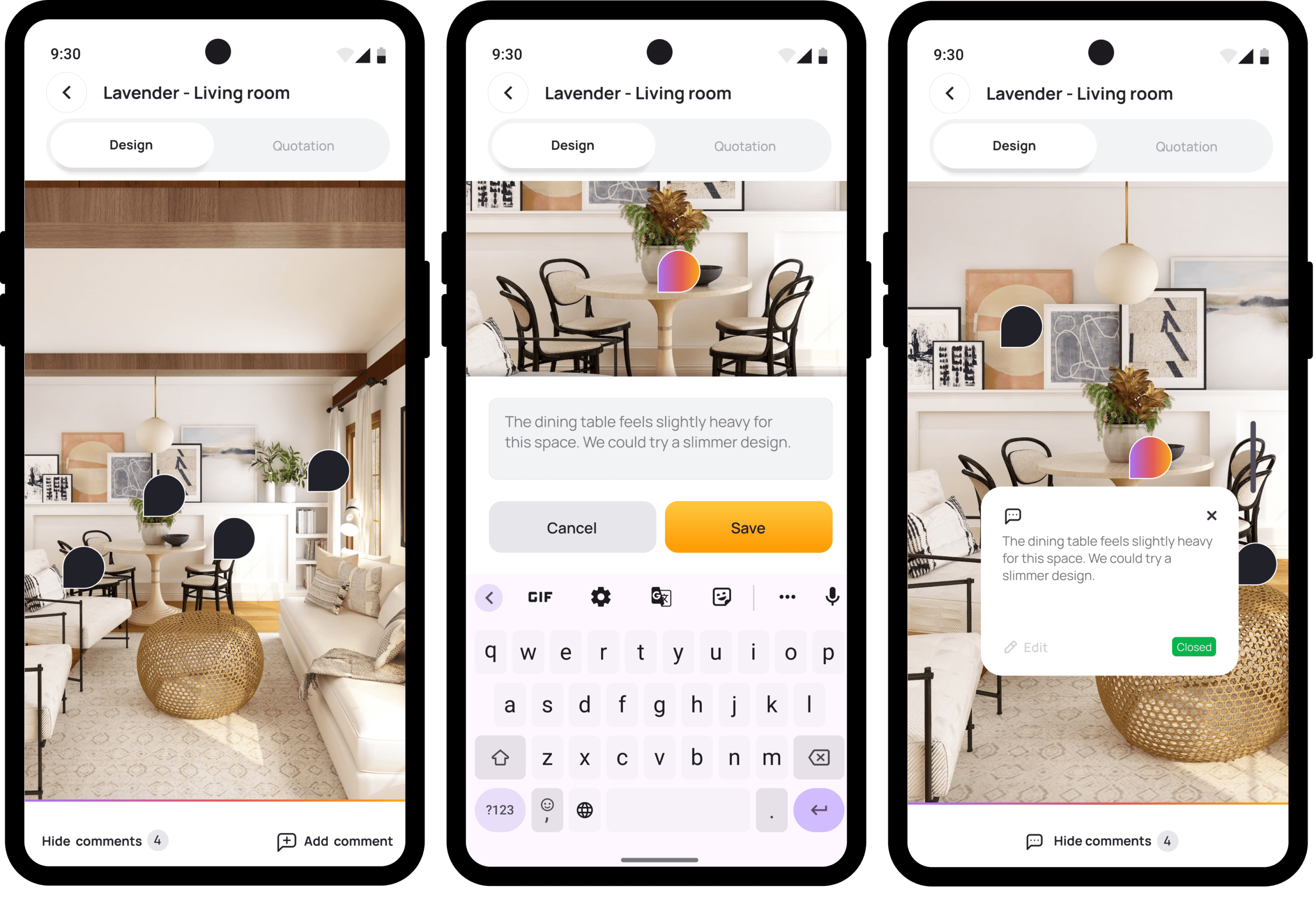
In-context Feedback and Review State Visibility
2. Transparent Project Tracking
Versioned design repository: All design iterations and updates were stored in a single repository, giving stakeholders a reliable record of changes without relying on past conversations.
Room-level version history access: Design versions could be reviewed at the level of individual rooms, allowing users to track how a specific space evolved without scanning the entire project.
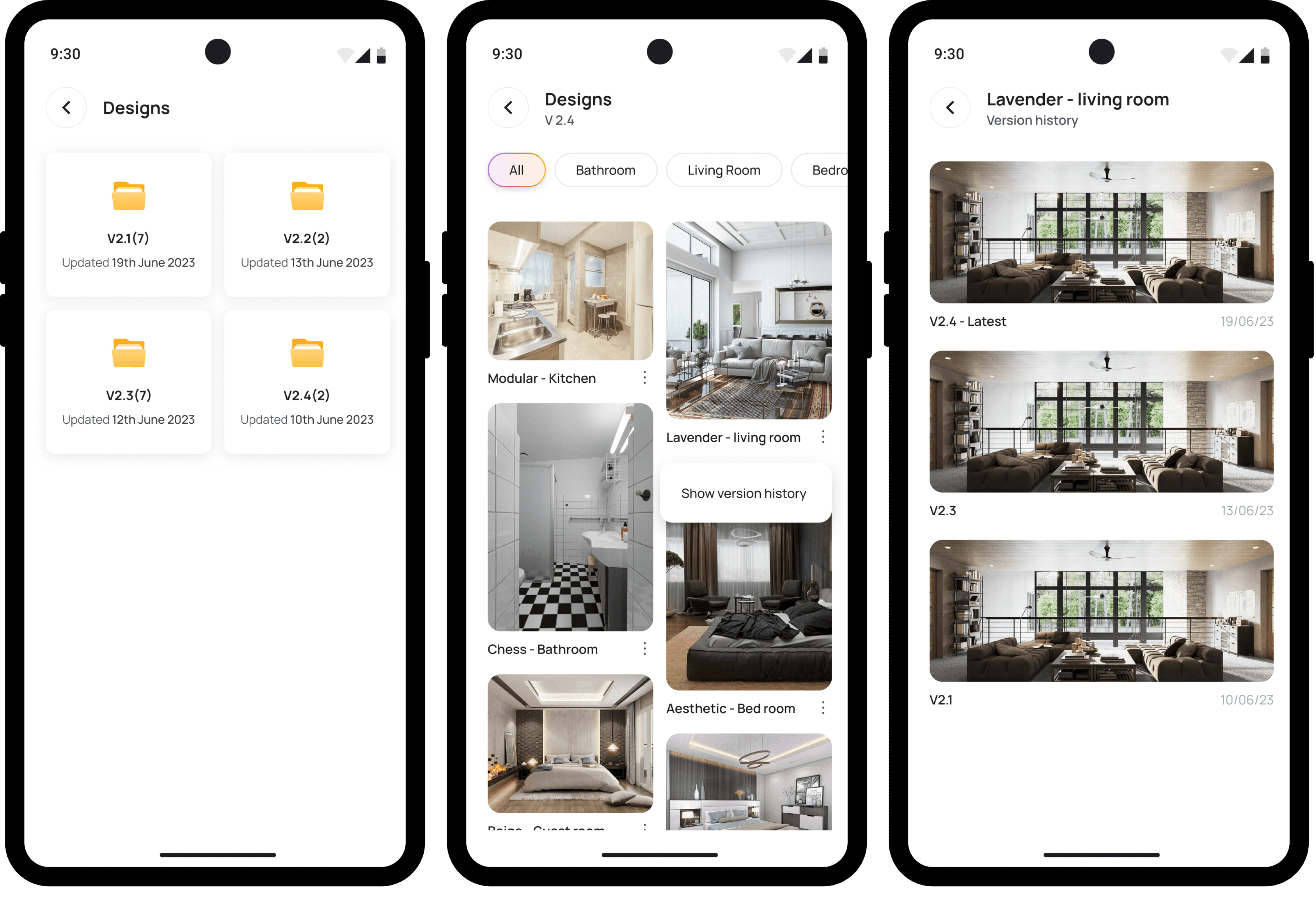
Versioned Design Tracking by Space
Outcomes
Behavior Change
• Fewer clarification messages during review cycles
• Less version backtracking between design iterations
Workflow Improvement
• Faster alignment between designers and homeowners
• Reduced need for manual coordination after reviews
User Confidence
• Stakeholders trusted project progress without repeated reassurance
Reflection
This project reinforced that collaboration problems are rarely communication problems.
They are visibility problems.
Designing explicit progress signals allowed stakeholders to move forward confidently without manual reassurance.